


Dance/Electronic
The Crystal Method: “There are moments I can still remember vividly because they were so fundamental to how we experienced the world…”
In this cover story, The Crystal Method’s Scott Kirkland looks back on 25 years of ‘Tweekend,’ its collaborations, electronic music, touring and lasting legacy.

Twenty-five years after its original release, The Crystal Method are revisiting their second studio album, Tweekend, a record that expanded the electronic duo’s sound through collaborations, rock influences and a growing connection with mainstream popular culture. Released in 2001 as the follow-up to their debut album Vegas, the record featured contributions from artists including Rage Against the Machine guitarist Tom Morello and Stone Temple Pilots frontman Scott Weiland, while tracks such as “Name of the Game” went on to appear across film, television and video games.
For Scott Kirkland, Tweekend also represents a period when the boundaries between electronic and rock music were becoming increasingly blurred. Having spent years touring Vegas and appearing alongside rock acts including Korn and Limp Bizkit, The Crystal Method approached their second album determined not to repeat their debut. Instead, Kirkland and Ken Jordan returned to their Los Angeles studio and developed a record incorporating electronic production alongside elements of rock, funk and hip-hop, working with musicians from outside the traditional electronic scene along the way.
In our latest Cover Story, about the 25th anniversary of Tweekend, Kirkland looks back on making the album, working with Tom Morello, crossing over to rock audiences and seeing The Crystal Method’s music become part of films and video games. He also discusses the Los Angeles rave culture that helped shape the duo, the changing relationship between rock and electronic music, Paul Oakenfold’s new interpretation of “Name of the Game,” and what Tweekend means to him a quarter of a century later.
Tweekend was a huge album for you when it was release. Twenty-five years later, what do you remember about that whole period of writing and recording the record?
“What I remember is that we toured extensively for our debut album, Vegas. It came out in 1997, and from that summer we were already on the road through June, July and August. We toured right through 1999 supporting that record. Our manager kept finding different places for us to play. We toured on our own, brought Orbital over for a travelling festival tour called Community Service in 1998, and then did the Family Values tour in 1999. When we got back into the studio, we had been in and out whenever we were home from the road, but we had basically been living with Vegas, all its tracks, remixes and related material, for almost three years. We knew we didn’t want to make Vegas 2.0. The world was different and we were different people. We both grew up listening to rock, soul and funk, and those elements were always part of the fabric of Vegas. The big drums, distortion and the sounds that permeate tracks like “Keep Hope Alive,” “Trip Like I Do,” “High Roller” and others were already there, but I didn’t want to go back in, pull out the 909 and simply try to make another version of the same record because we were in a different place creatively.
At the time, I was listening to a lot of rare funk. There was a great record store in Chicago called Dusty Groove, and they had all these rare funk records, obscure compilations and things you wouldn’t normally discover. I was leaning into that side of our sound and our roots. We had a couple of demos, and I remember in early 2000 somebody came to the studio to hear them. I think it was Mike Simpson from the Dust Brothers. At the time, they were talking about this band called Hybrid Theory, which was mixing hip-hop and rock. That obviously became Linkin Park. We played some of our material and the reaction was basically, “That’s cool.” But you don’t look at the early drawings of an artist’s work or taste the soup when there are only two ingredients in the pot and judge the finished thing. We weren’t deterred if somebody didn’t immediately understand it. If anything, we tended to lean further into what we were doing.
We found out Tom Morello was a fan of Vegas, so we reached out to him and suddenly he was in the studio producing tracks with us. From there, we kept pushing forward and finding our roots and our sound. One of the things I’ve always liked about The Crystal Method is that even when we moved from Vegas to Tweekend and then onto later albums, people would still say, “It sounds like The Crystal Method.” That’s exactly what we wanted. We wanted each album to sound different while still being recognisably us. We worked in the same tiny two-car garage studio in La Crescenta, a suburb of Los Angeles, and approached it very similarly to Vegas. We worked on our own and brought in people we thought were compatible and could genuinely add something. By the time we finished the record in early 2001, we were incredibly excited. We had these big, beefy tracks with some amazingly talented artists involved, and we were completely committed to it.“
Looking back now, it was obviously a huge album for you. When you revisited the original recordings for the updated version, did you discover anything that made you look at the album differently?
“Not really in a dramatic way. Ken and I have revisited Vegas a couple of times for anniversary editions, and when you look back at those records, you almost see them as being made by two different people. Obviously, we are the same two people, but we were in a completely different environment and a different world. We didn’t have families and we didn’t have the same weight of expectation. There was some pressure following Vegas because it had been successful, but we tended to treat that as a challenge rather than a burden. We wanted to work with creative people and see where that took us.
Aside from Tom Morello, we worked with Scott Weiland, although we were never actually in the same room with him. We sent tracks to him on a hard drive and he recorded his vocals separately. Another hugely important creative presence on the album was Jon Brion, who is this incredibly unique composer, guitarist and multi-instrumentalist. He has done a lot of film scores and was in a band called The Grays. We had already worked with him on Vegas, on the final track “Bad Stone.” Ken had known him through studio work before we started the band, and around that time we were going to a lot of raves. We would bring people from more traditional rock backgrounds along with us because we were so fascinated by the scene and thought they would enjoy it too. Jon was one of those people.
Jon was somebody we really admired because he was so adaptable and creative. He used to do these one-man shows at Largo in Los Angeles where he had guitars, drums and looping equipment and would essentially improvise songs based on suggestions from the audience. Somebody might choose a song and somebody else would choose a genre, so he might perform “Dancing Queen” as a polka. He was incredibly talented and had all these unusual instruments, distortion pedals, drum machines and strange stringed instruments. He features on “Over the Line,” and he brought in this little vocoder-style box. We had a really interesting jam session with him and ended up with a track that was a bit of a departure for us. That whole record was about experimenting and building on where we had come from with Vegas without simply repeating it.”
“There was some pressure following Vegas because it had been successful, but we tended to treat that as a challenge rather than a burden. We wanted to work with creative people and see where that took us.”
When you listen to the new version of the record, does it transport you back to those times?
“It does a little. I’ve listened to it many times over the last few months, and sometimes I hear it and think, “How did we get that sound?” Back then we didn’t have the technology, endless hard-drive space or unlimited sample time we have now. It was obviously more advanced than when we were making Vegas, but we were still working with Digital Performer and Pro Tools for audio, and you couldn’t automate or manipulate things in the same way you can today. A lot of it had to be done live using knobs on synthesizers.
One of our methods involved using a DAT machine. We would put a drum beat on one side and send a synth through pedals to the other side. I would sit there and jam for twenty minutes while Ken made notes saying, “At two minutes thirty you did something really cool,” or, “At three minutes fifteen you did this.” Then we would go back, find those moments, sample them and piece things together. It wasn’t necessarily unique, but it was the process we were most comfortable with, and I think it gave the music an organic quality.
As technology improved and we gained endless digital recording capabilities, recall and all those possibilities, maybe we became a little lazy or simply worked differently. So when I listen now, I hear it with both nostalgia and a critical ear. I can remember exactly when we did certain things, but I can also hear sections and think, “Why didn’t we change that note?” or, “Why is that section so long?” My current mind might make different choices. But I’m not going to become George Lucas and start recutting our classic records. Sometimes when we performed the songs live, we naturally made those changes anyway. I think most artists listen back that way. You can appreciate what you made while always hearing something you might do differently now.”

V13 Cover Story 136 – The Crystal Method
You’ve talked about Vegas being a landmark album for the band and not wanting to make Vegas 2.0. Did you feel pressure making the follow-up, or did the success give you more creative freedom?
“I think it was a little of both. The label wasn’t pressuring us to change, but the label situation itself changed. Vegas came out through Outpost, an imprint connected to Geffen and Interscope that was run by some incredibly talented and influential people. Scott Litt, who produced the R.E.M. records and worked on Nirvana material, was involved, along with Eddie Rosenblatt and Mark Williams. They gave us a great deal of autonomy. We already had much of Vegas written by the time we signed, but while we finished it, they were completely in our corner. There wasn’t this pressure of, “You need a hit.” It was a different time.
By the time we were making Tweekend, Outpost had been dissolved and we were part of Interscope. Interscope and Geffen were putting out a huge amount of music, and we worried that we might simply become one of a hundred albums coming out in a particular cycle. The head of the label visited the studio and tried to reassure us that we were important to them, but we had our own little studio. We weren’t paying commercial studio rates and weren’t asking the label for money to support us. We were making money through syncs and touring, although touring wasn’t necessarily hugely profitable, and people were still buying records.
We had sold around half a million copies of Vegas and were getting placements in films and television, so the label wasn’t an integral part of our creative process. They were over the hill in Los Angeles while we were in this tiny studio deep in the Valley. We also had a great A&R person, John Sidel, who had been with us from the beginning. I’m sure there were moments where we thought, “We need to make something special because we’ve built this audience and there’s always the possibility of the sophomore slump.” But we were young, probably a little stupid, and didn’t really know any better. We went in with the plan that we weren’t going to make Vegas 2.0. That opened the door to other possibilities. We were still producing in a similar way, but we brought in different artists, explored different sounds and simply ran with it.”
“My current mind might make different choices. But I’m not going to become George Lucas and start recutting our classic records. Sometimes when we performed the songs live, we naturally made those changes anyway.”
You’ve talked about working with Scott Weiland and Tom Morello. Tweekend came out at a time when electronic music and rock didn’t necessarily mix in the way they do now. Did you realise you were helping shape something that would become important to music?
“I don’t know if we realised it at the time. When Vegas came out, there was a very clever A&R person named Happy Walters who put together the Spawn soundtrack, which deliberately blended electronic artists with heavy metal. We did a track with Filter, and there were all these different collaborations pairing the two worlds. That helped bridge the gap.
What we couldn’t have known was how completely electronic production would eventually become integrated into almost every form of popular music. Even country music has electronic elements now, which is insane. Hip-hop, pop and rock all eventually adopted synthesis and production techniques that had been championed by artists like The Prodigy, The Chemical Brothers, Orbital, The Orb, The Crystal Method, Fluke and Moby. Those techniques became part of the wider musical language.
By the time we finished Tweekend, we had more rock elements in our music and were playing more rock festivals than electronic festivals. There had also been huge expectations placed on electronic music. The Prodigy were appearing on magazine covers as the next big thing as grunge was fading, and Keith Flint obviously made for a great cover. But electronic music could never fully live up to that particular expectation because American rock radio was still largely built around traditional rock songs.
Then the post-grunge era brought bands like Rage Against the Machine, Tool, Limp Bizkit and Korn, who were also incorporating different elements. Limp Bizkit were using hip-hop and scratching, and other bands were blending different styles too. To us, the crossover felt inevitable. There was something incredibly appealing about the sounds, production techniques and synthesizers electronic artists were using. Looking at where music eventually went, with something like K-pop being almost entirely electronic in its production, it doesn’t feel particularly surprising. We believed we were doing something special, so we expected those ideas to continue growing.”
American rock radio was still very traditional at the time. Did you find it challenging to convince rock audiences to take you seriously or give you a chance?
“We were confident and probably pretty ballsy about it. Because tracks like “Busy Child” and “(Can’t You) Trip Like I Do” from the Spawn soundtrack received airplay, we were getting played on stations like KROQ, Live 105 in San Francisco, The End in Seattle and stations in Boston and elsewhere. Those stations needed something after grunge, so they gravitated towards The Prodigy, The Chemical Brothers and us.
That meant we started playing radio rock festivals. You might have Green Day and The Offspring on the bill, and we would sometimes close because nobody actually wanted the final slot. Everybody wanted that 8:00 to 9:30 position, while the 9:30 to 10:30 slot was less desirable. We would take it and suddenly find ourselves playing in front of tens of thousands of people. We played one rock-radio festival in Washington, D.C. at a huge football stadium, and we went on right after Green Day. They finished their set, set their gear on fire and walked offstage in front of something like fifty thousand people. Then we were there pushing our equipment, lights and strobes onto the stage thinking, “Okay, here we go.”
We probably held onto eighty per cent of that audience and won them over. We became a bridge for some people. We’ve been described as a gateway drug to electronic music, and I understand that because I came from a background where I was a heavy-metal purist. I grew up loving Mötley Crüe, Judas Priest, Iron Maiden and AC/DC, then found my way into the rave and club scene organically. It didn’t surprise me that other people could make the same journey.
We did the Family Values Tour with Korn, Limp Bizkit, Filter and others in 1999, and we would play to crowds where some people were flipping us off or standing there with their arms folded. But more often, people would come up after the show wearing a Limp Bizkit, Offspring or Nirvana shirt and say, “I’ve never heard you guys before. You’re fucking awesome.” That was enough for us. We would simply go out, do our show and try to win people over and sometimes it went really well, sometimes it was a challenge but we were, you know, ballsy enough and confident enough to go and do it.”
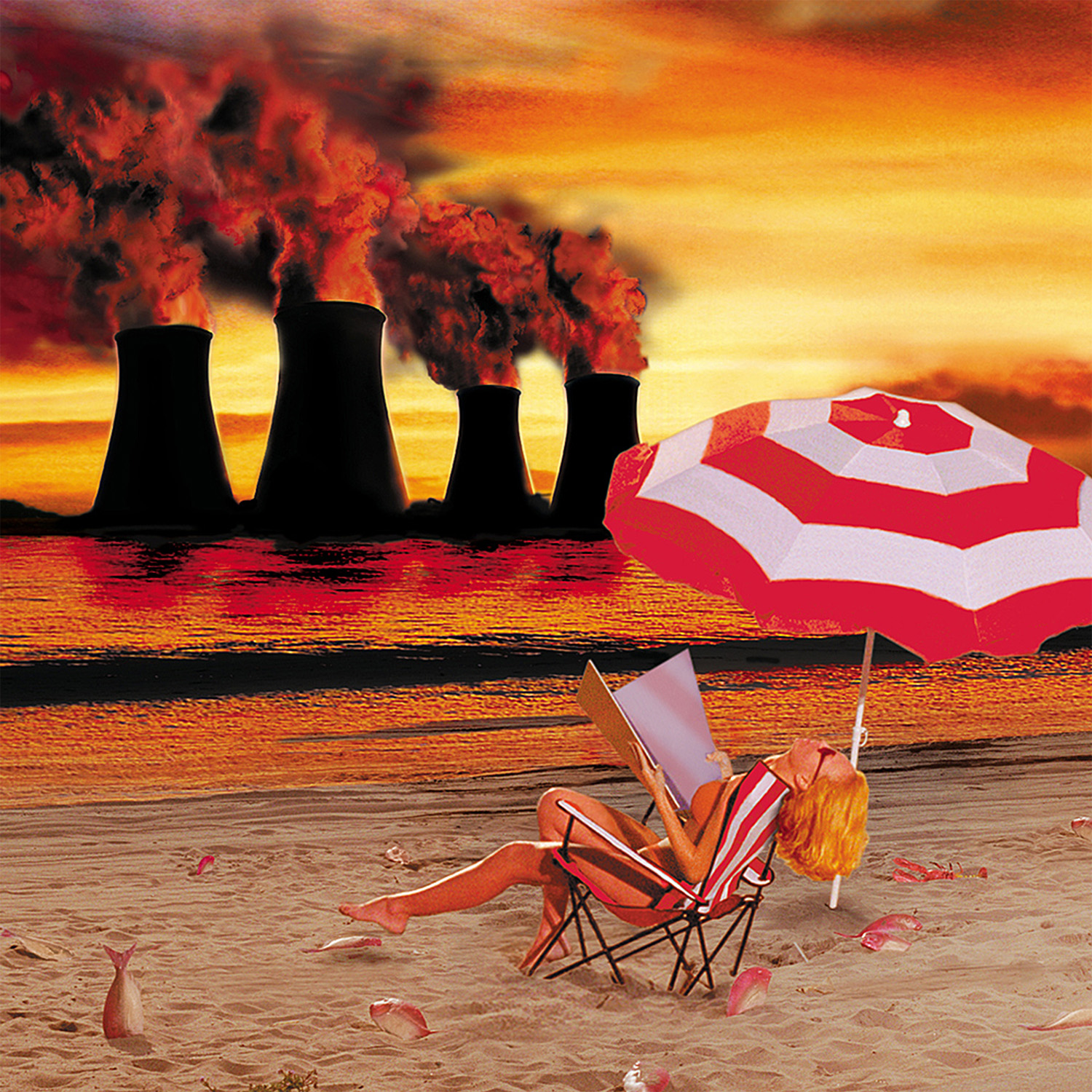
The Crystal Method ‘Tweekend’
What did you take away from touring with bands like Korn and Limp Bizkit? That was a very hardcore, metal-oriented audience. What did those experiences teach you?
“That we belonged on that stage because we were loud, aggressive and sonically able to stand alongside those bands. We might not have had a vocalist leading people through the songs, but we had top-line synths, distortion and a level of aggression that worked in that environment. We also had a cool light show with a lot of strobes and moving lights. Our lighting director was an English guy from the rock world who had worked with Smashing Pumpkins, Beastie Boys, Metallica, Tina Turner and Marilyn Manson, so he knew how to make us look fucking cool. The whole show looked and sounded big and aggressive. More than anything, touring in that environment gave us confidence. We weren’t afraid of challenging ourselves or challenging the audience. If they didn’t get it, then fuck it, we’d move on to the next city.”
I wanted to talk about Tom Morello because you’ve described him as being much more than simply a guest performer on the album. What do you think made that partnership work so well?
“He’s just a fucking cool dude and a musician’s musician. We didn’t know at the time, but we later found out Rage Against the Machine were going through turmoil while working on their covers album. Tom would drive to our studio, which could be twenty or thirty minutes away depending on traffic, and he was always on time. He never brought any negative energy into the room. He never complained about the drive or talked about problems within his own band. He simply showed up and was completely in the moment. Our studio was janky as fuck. It was a makeshift studio and we literally put his amp in the kitchen. It wasn’t cosy or comfortable and didn’t have many of the things you would expect from a professional studio, but Tom didn’t care. He just thought it was cool that it was our space and that we could stay there all night working without paying hundreds of dollars an hour.
We had a similar experience when we worked with Tommy Lee on his side project around that same period. He walked in and immediately loved the place because it was our world and our gear. Tom was the same way. Whenever he participated, he was completely present and brought a huge amount of ideas. When we recorded the vocals for “Wild, Sweet and Cool,” Tom and I were huddled in the corner coming up with ideas before these three incredible soul singers arrived. They came in, heard the song once and immediately had their own ideas. Tom and I looked at each other and basically thought, “Yeah, that’s much better than what we came up with.” Working with him taught us a lot about being present in the creative process and, frankly, about how to be a really cool human being, especially when you’re as talented and acclaimed as he is.”
Working with Tom Morello and Tommy Lee brought you into two very different musical worlds. What challenged you creatively about working with artists like that?
“You want to come up with something fucking cool enough to make them excited. When you’re working with artists who have made huge albums and are loved by so many people, you want to bring the absolute best you have into those sessions. It’s similar to going on tour with a massive band. You simply want to rise to the occasion. On “Name of the Game,” the main riff was actually an accident. Tom was plugging in his amp and warming up, and he played essentially the riff that exists on the final record. We immediately asked, “What was that?” He said, “What was what?” He genuinely didn’t know because he was just warming up.
Thankfully, we were clever enough to keep recording what he was doing. We didn’t have the Pro Tools capabilities we have today, so we routed his guitar through a DAT machine so we could capture everything. Around twenty or thirty minutes later, he played the riff again and we grabbed it. We spent the rest of that session playing around with ideas, then Tom went home and said he’d come back the next day. Ken and I stayed up all night working with that riff and building the bones of what eventually became “Name of the Game.” When Tom came back the next day, he heard it and said, “Whoa, that’s fucking cool.” That propelled the whole track forward. He’s a savant and an incredible guitar player. His approach to solos is completely unique. He would do things like pull the quarter-inch cable out of his guitar and use it against the pickups to create these raunchy, distorted scratching sounds. He was incredibly innovative and just a great person to work with.”
Was there anybody you wanted to collaborate with at the time but never managed to make it happen?
“We really wanted to work with PJ Harvey. That never happened, but I fucking loved PJ Harvey, especially those first few albums and the production from Flood. She had such presence and was such a great songwriter. I think we reached out, although I don’t remember whether we ever received a response. There were also a few artists we brought into the studio who didn’t work out, and I don’t really need to name them. Sometimes there’s an artist or rapper you really like, but they come into the room and there’s no chemistry. They’re distracted, taking calls or simply not really in the moment. Maybe they don’t connect with the song or something about the situation isn’t right. That happens. I’ve been asked many times which artists I’d like to work with, and there are plenty of people I fucking love and would love the opportunity to collaborate with, but they also have to want to work with us. If the chemistry isn’t there, it isn’t going to work.”
Moving on to “Name of the Game,” that track took you into another world through movies, television and video games. What was it like seeing the music cross over into mainstream popular culture in that way?
“We got a taste of that with Vegas, but it really exploded with “Name of the Game.” Around that same period, the first Xbox came out and there was this huge influx of games, titles and stories. We ended up on soundtracks for things like Splinter Cell and various other games. The first one that really put us on the map globally was FIFA 98. We had three songs on that, including “Keep Hope Alive” and “Busy Child,” and I think “Now Is the Time” was on there too. Blur’s “Song 2” was probably the biggest track on the soundtrack, but FIFA 98 was huge internationally and the game itself was fucking awesome.
We also had an almost entirely English touring crew at the time. Our lighting director was English, our backline guy Harry was English, we had an English tour manager and English management. Those guys loved football, so we would have these late-night FIFA sessions on the back of the bus while hearing our own songs in the game. That was a lot of fun. That was probably the first major crossover moment, back in 1998. Then when Tweekend came out, songs like “Name of the Game,” “Wild, Sweet and Cool” and “Roll It Up” pushed us even further into that world.”
I remember FIFA 98, although I was terrible at it…
“I wasn’t very good either, but after playing for four hours every night on the tour bus you start getting better. We didn’t have much else to do. You’d finish a show completely wired and then spend the night driving from Phoenix to Albuquerque or wherever we were going. Ken didn’t really play, so it was mostly me and the crew.”
I remember Splinter Cell as well. When a song is big in the charts or clubs, it exists in one world, but when it becomes part of video games, movies and television, does it take on a different meaning because people begin associating it with those moments in popular culture?
“Definitely. We’ve only made music specifically for a video game once or twice. There was one racing game where you drove around with weapons and tried to blow up the other cars, and we wrote some music specifically for that and for menus and opening sequences. But most of the time we would release a song on an album and then it would find its way into a film, television show or video game afterwards. It was always really cool seeing how somebody else interpreted our music and how editors would sometimes cut entire scenes around one of our tracks. Having something we created independently find its way into another medium and genuinely enhance a scene was almost an out-of-body experience at first.
One of the earliest big examples was The Replacement Killers with Chow Yun-Fat. I think we were actually in London when it came out, so we went to see it in the cinema. “Keep Hope Alive” was used in the opening sequence. There’s this dramatic moment where somebody places a bullet on the table in front of Chow Yun-Fat in a nightclub, then the track takes off and suddenly there’s fighting and action. Seeing that was incredible. Later you had something like The Matrix, which showed how effectively contemporary music could be used to enhance a film rather than relying entirely on traditional score music. We knew there were younger editors around our age listening to the same music we were listening to, and sometimes they would hear one of our tracks and think, “I love this song. I’m going to try it against this scene and see what the director thinks.””
“We also had an almost entirely English touring crew at the time. Those guys loved football, so we would have these late-night FIFA sessions on the back of the bus while hearing our own songs in the game.”
That’s essentially what happened with “Name of the Game” and Tropic Thunder. We found out Ben Stiller was a big fan. He had used one of our Vegas tracks as transition music in a stage production years earlier, which we knew nothing about at the time. Later, while filming Night at the Museum, there’s a scene where he’s being chased around the museum by a prehistoric dinosaur. Obviously, the dinosaur was CGI, so he was essentially running around pretending it was there. He told us they would blast “Name of the Game” through the set to get him energised while filming. Then when he was making Tropic Thunder, there was that big sequence where everybody heads out into the jungle and he used “Name of the Game.” He was really excited to bring us in and show us the scene. We later edited some dialogue from the movie into the version of “Name of the Game” that plays at the very end after Tom Cruise’s dance.
When you discover people you admire from afar also admire something you’ve done, it’s mind-blowing. The same thing happened when I first met Tommy Lee. I grew up as a huge Mötley Crüe fan. I loved Shout at the Devil, “Live Wire,” had the T-shirts, went to the concerts and had their pictures on my wall. Then I meet Tommy at a party and introduce myself as Scott from The Crystal Method, and he immediately says, “No fucking way! I took my kids to your fucking concert in LA a couple of years ago.” I remember thinking, “What the fuck is going on here?” Those moments are incredibly sweet, especially when the people turn out to be genuinely cool. That old saying about some of the most talented people also being the kindest has largely held true for us.”
One thing you touched on earlier was the rave and electronic scene. Tweekend itself references that culture. In the UK, that scene exploded partly out of some quite difficult social circumstances. What was it like being part of that culture in America?
“It was very similar. Los Angeles was incredibly divided. You had the LA riots around 1991 or 1992, and poorer or less affluent parts of the city were dealing with racism, police overreach and all kinds of social problems. In the late ’80s and early ‘90s, we were going to raves deep in South Central and other neglected parts of the city. Sometimes you’d be given a map location for an abandoned warehouse in South Central and think, “What the hell are we doing?” But we were young, probably a little dumb, and completely determined to find this music and this scene.
You’d arrive and discover these warehouses transformed into clubs with giant sound systems, moving lights, cheap admission, cheap beers and fucking great music from DJs and artists flying in from around the world. Later, around 1992 or 1993, more established clubs started emerging, but before that our version of something like The Haçienda was being created in temporary warehouse spaces. One weekend it would be a club and the next week it would be empty again. It was completely DIY, and that environment massively shaped our musical tastes and what inspired us early on.
I remember seeing Orbital for the first time around 1993 in Los Angeles. We watched these two guys without a singer performing using equipment that we actually had some version of ourselves. Until then, we thought we might become producers or remixers and work within electronic music that way. Seeing Orbital made us think, “Fuck, if those two guys can do this, why can’t we?” The wider city could feel challenging, particularly after the riots and all the racial upheaval, but once you entered those rooms, none of that really mattered. Gay, straight, Black, white, whatever — everybody was simply having a fucking good time together. We genuinely felt like we were part of something really special. There are moments from that period I can still remember vividly because they were so fundamental to how we experienced the world and how we wanted to make music.”
That ties into something you hear often in documentaries about the UK rave scene. People talk about how the culture gave them an escape from difficult times. Twenty-five years later, those same people have children, families, jobs and bills. Do you think Tweekend represents something different to those listeners now?
“It definitely does, and I see that at shows. I’ll play something from Vegas or Tweekend and see people who were there the first time around. They’re older now, they’ve lived lives and have families, and sometimes they bring their kids. They’ll come up and say, “We had our kid around 2000 and raised them on your music, and now they’re old enough to come to the show.” That’s remarkable.
I understand it because the same thing happens with my own kids. I grew up listening to all these bands and eventually got into Depeche Mode, New Order and artists like that. Now my son wears Depeche Mode shirts. He has his own taste in music, but he also has playlists containing those older things. My daughter might suddenly be listening to Radiohead and I’ll think, “I remember when that album came out. I loved that twenty years ago and now my daughter has discovered something in it.” If you make great art, I think that art continues somehow.
We’ve been fortunate enough to make music that found its way into a lot of people’s lives, and they keep it alive by sharing it with friends or their children. My girlfriend didn’t really know much about The Crystal Method when we met. She mentioned to her younger brother that she was dating somebody from the band and he said, “No fucking way! Dad and I used to listen to them all the time.” Now whenever I play Chicago, her brother comes to the show with his partner and we hang out. My own kids tell their friends their dad is in The Crystal Method, and suddenly you get these strange connections across generations. It’s a wild world, but I understand it because I do exactly the same thing with the music I love. Seeing it passed onto another generation is a beautiful thing. I’m very proud and humbled by it.”
Paul Oakenfold has remixed “Name of the Game.” What excites you about hearing another artist’s interpretation of such an important track, particularly twenty-five years later?
“I’ve known Paul forever. He remixed “Busy Child” years ago, and although we haven’t spent huge amounts of time together, whenever we have, we’ve definitely made some mischief. He has his own sound, and that’s what you want from somebody doing a remix. It’s similar to the way we approach remixes ourselves. You bring your own identity to the song without changing it so completely that the original becomes unrecognisable. I remixed Billy Idol’s “Rebel Yell” a couple of years ago, and I grew up with that song. I didn’t want to completely change something I loved. I kept the vocal and a lot of the guitars, then rebuilt the backbeat and bass around them. I later heard that Billy and Steve really liked the track. That’s the balance I think you’re trying to find with a remix: bring something of yourself to it while still honouring what made the original special.
I think Paul is one of those people who really understands that balance. He redid the bassline and added some synth elements, but it still keeps the essence of the original because “Name of the Game” isn’t necessarily a track that adapts easily to a much higher tempo. My friend Glenn from Bournemouth also did two really strong remixes: the Equilateral remix and another more mid-tempo take on it. But Paul is a legend. He’s a genuinely lovely guy who has been doing this longer than most and he understands what the track needs. We’ve toured together as well, and there’s a really nice overlap between our audiences. There are probably people who come to see Paul who have never seen me before, and vice versa. Friends have told me, “I’ve seen you five times, but I’ve never seen Paul.” It becomes one of those situations where one plus one equals three. That’s how I look at remixes too. You want to retain the essence of the original, honour what made it work in the first place, then bring your own flavour into it and create something fresh.”
Perfect. Just to wrap up then, if somebody has never heard Tweekend before and they put it on today, where do you hope it takes them? We’ve talked about how it can transport longtime fans back to that era, but what would you hope a new listener takes from it?
“It’s hard to say because music is constantly evolving now and production techniques keep moving forward. I think you simply have to listen to it and, like the needle finding its way onto a record, find your way into the groove. You either appreciate it or you don’t because music is completely subjective, styles are changing every day and genres are constantly evolving. But I think a new listener could appreciate the mixture of hip-hop, rock and electronic elements. If you stick with it and make your way to the end, hopefully you’ll find something for yourself in there. It’s almost like watching a documentary on Netflix: just take the ride, enjoy it and see whether there’s something in it you want to carry forward with you.”


Protest The Hero: “Suddenly this rumour started going around that we weren’t capable of playing our own songs!”

Europe: “We’ve always said we should stay adventurous, do things the way we want and do what feels right.”

The Hoosiers Tear Apart Manchester’s O2 Ritz on their ‘Compassion’ Tour [Photos]

Stereo Six: Graham Hunt Reveals Six Songs Influencing New Album ‘American Pyramid’

Diminished Men Drop Terrifically Trippy “The Five Agents” Music Video

Destroy Boys Details Their Forthcoming Album, ‘FOIE GRAS’

3FORCE Unveil New Album ‘Strange Peace’ via FiXT

Christone Ingram’s Burning Blues Set Montreal Ablaze at Théâtre Beanfield [Photos]


-
 Metal2 days ago
Protest The Hero: “Suddenly this rumour started going around that we weren’t capable of playing our own songs!”
-
 Indie13 hours ago
The Hoosiers Tear Apart Manchester’s O2 Ritz on their ‘Compassion’ Tour [Photos]
-
 Alternative/Rock2 days ago
Stereo Six: Graham Hunt Reveals Six Songs Influencing New Album ‘American Pyramid’
-

 Alternative/Rock4 days ago
UnCovered: Glenn Morrow Mulls Over His ‘Our Final Album-Vol. 1’ Artwork
-

 Alternative/Rock3 days ago
Levara Premiere the Music Video for Their Relatable Single “Underneath It All”
-

 Alternative/Rock4 days ago
Alex Henry Foster Shares His “Calling Out!” Music Video
-

 Hip-Hop/Rap4 days ago
Kottonmouth Kings Debut “California Burning” Music Video
-

 Album News4 days ago
Neatly Drawn Blinds Releases New Album ‘Cracks in the Code’